Uganda has long been known as “The Pearl of Africa.” It is an extraordinary description for an extraordinary country—a place of immense natural beauty, fertile landscapes, wildlife, the waters of Lake Victoria and the beginnings of one of the world’s great rivers, the Nile. But Uganda also carries another history.
It is a history of political upheaval, dictatorship, rebellion, ambition and the continuing struggle over who possesses power—and what people are willing to do to obtain it. That contradiction between beauty and brutality, hope and fear, idealism and power makes Uganda far more than a setting.
It makes it a place filled with stories. And it is one of the places that helped shape the international world of my political thriller, STRIKE.

Beyond the Pearl of Africa
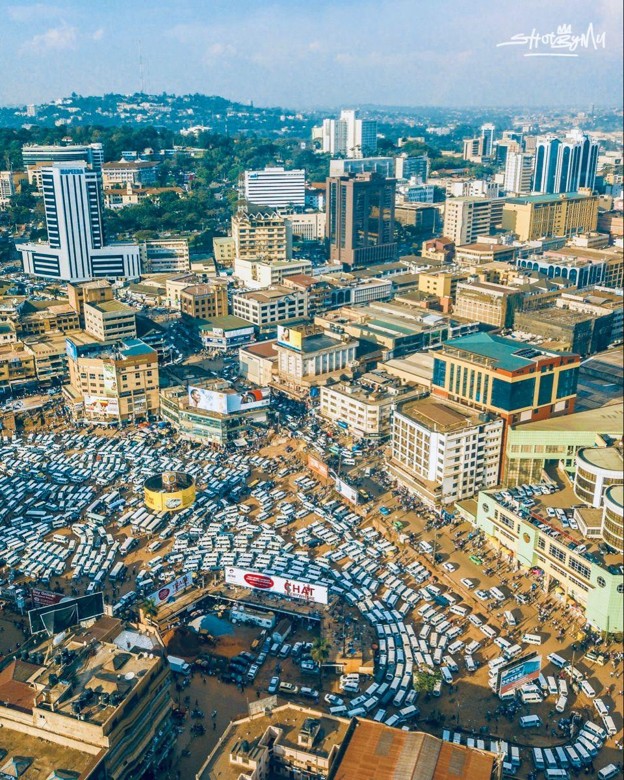
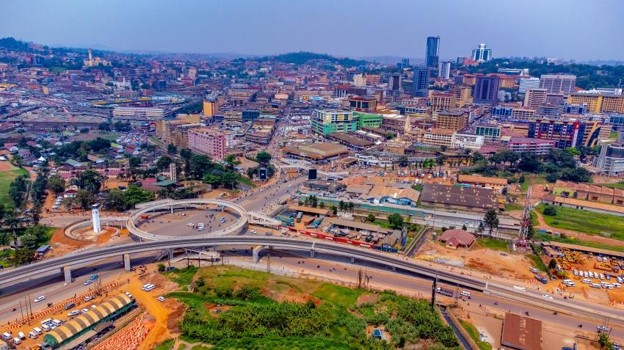
To understand Uganda is to understand contrasts. Its capital, Kampala, is a thriving East African city filled with commerce, universities, entrepreneurs, markets, restaurants and a young population looking toward the future. Beyond the city are landscapes that seem almost cinematic: mountains, forests, savannas, lakes and the Nile.
Yet Uganda’s modern history has also been shaped by periods of extraordinary political turbulence. The dictatorship of Idi Amin remains one of the darkest chapters in the country’s history. Later decades brought another form of terror through Joseph Kony and the Lord’s Resistance Army, whose campaign of violence devastated communities in northern Uganda and neighboring areas.
These are not simply chapters in a history book. They raise questions that remain universal:
- Why do people follow powerful men?
- When does political idealism become fanaticism?
- Can someone begin by fighting injustice and eventually become part of the very injustice he once opposed?
And perhaps most importantly:
What happens when two people believe they are destined to change the world—but envision completely different worlds?
Those questions fascinated me while creating STRIKE.
Enter Ajax
One of the characters who emerged from this world is Ajax. Ajax does not begin his journey surrounded by privilege or political power. He leaves a small Ugandan village and eventually makes his way toward Kampala. He experiences life on the streets. He reads. He observes. He studies ideas about class, revolution and power. Most importantly, he begins to imagine a different future.
Ajax doesn’t simply want to survive his circumstances. He wants to change them. His ambitions become enormous: a united Africa, with Uganda at its center/ At first, Ajax and his comrades see themselves as revolutionaries rather than criminals. They target prosperous businesses rather than the poor and imagine that the money they take will ultimately support their cause and help those who have been forgotten. It creates one of the moral questions at the heart of his character:
Can an illegal act become righteous simply because the person committing it believes the cause is righteous?
Ajax believes he knows the answer. History is rarely so accommodating.
When Ajax Enters Kony’s World
Eventually Ajax’s growing reputation attracts the attention of a far more dangerous revolutionary figure: Joseph Kony. The two represent very different manifestations of power. Ajax sees himself as an ideological revolutionary with a vision for Africa. Kony sees a rival.
As stories of Ajax’s exploits spread, his Robin Hood-like reputation becomes increasingly difficult to ignore. In the world of STRIKE, that reputation ultimately places Ajax directly in Kony’s path. Kony cannot tolerate another man accumulating loyalty, influence and mythology. And suddenly Ajax is no longer simply fighting for an idea. He is being hunted. That confrontation becomes part of a much larger story—one that eventually reaches far beyond Uganda.
From Uganda to Washington
This is where STRIKE becomes truly international. The novel moves across borders because power itself moves across borders. Events in Africa do not necessarily remain in Africa. Events in Cuba do not necessarily remain in Cuba. And decisions made thousands of miles from Washington can eventually find their way into the rooms where America’s future is being decided. That interconnectedness is important to STRIKE.
The novel asks readers to consider how political movements begin, how loyalties are created, how grievances are exploited and how people who appear to inhabit completely different worlds can eventually become connected by the same struggle for influence and control. Ajax is one of those connections. His Uganda story helps explain the man he eventually becomes.

The Making of a Revolutionary
We tend to encounter powerful or dangerous people after history has already given them a label.
- Dictator.
- Revolutionary.
- Terrorist.
- Hero.
- Criminal.
- Leader.
But nobody begins life with one of those words attached to his name. People become who they are. That transformation interests me as a storyteller.
- What did someone see?
- What did he experience?
- What did he read?
- Who humiliated him?
- Who inspired him?
- When did ambition become ideology?
- And when did ideology become justification?
- Ajax gave me an opportunity to explore those questions within the landscape and political history of Uganda.
He isn’t intended to provide an easy answer. He is intended to make the reader uncomfortable enough to ask the question.

Why Uganda Matters in STRIKE
Uganda gives STRIKE something essential: perspective. A political crisis viewed only from Washington is one story. Viewed from Havana, it becomes another. Viewed from the streets and villages of East Africa, the meaning of power changes again. For someone with little money or institutional authority, power can appear almost mythical. It can represent freedom, revenge, dignity or simply the ability never to be powerless again.
That is dangerous territory. Because the desire to correct injustice can produce extraordinary courage. It can also produce another form of tyranny. The distance between those two outcomes may be much smaller than we would like to believe.
The World Is Smaller Than We Think
STRIKE is a political thriller, but beneath the conspiracies, international intrigue and rapidly unfolding events, I wanted to explore something more fundamental. Human nature travels.
- Ambition travels.
- Fear travels.
- Ideology travels.
And power rarely respects borders. Uganda may seem very far from Washington, D.C.
In STRIKE, it isn’t.
- Neither is Cuba.
- Neither is Brooklyn.
- Neither is Miami.
Each location contributes another piece to a larger puzzle about loyalty, freedom, responsibility and the choices people make when history suddenly gives them an opportunity to act. Ajax’s journey begins thousands of miles from the center of American political power. But eventually his world and America’s world collide.
And that is precisely the point. In an interconnected world, the place that appears farthest away may already be much closer than we realize.
About STRIKE
STRIKE by Stan Shanbron is an international political thriller spanning the United States, Cuba and East Africa. Against the backdrop of a six-hour nationwide strike, political intrigue, conspiracy and deep personal choices collide as characters from dramatically different worlds become connected by questions of loyalty, freedom, ambition and power.
Discover STRIKE and learn more about Stan Shanbron at StanShanbron.com.